

Laser eye surgery helps correct various vision problems, including nearsightedness, farsightedness, and astigmatism. There are several different procedures available, and each one improves how light is focused on the retina. This is done either by reshaping the cornea or by replacing the eye’s natural lens. Here’s information about three different laser eye surgeries and when they’re used:
LASIK Surgery
LASIK eye surgery helps correct refractive errors, which occur when the eye doesn’t bend light correctly. These errors prevent light from focusing properly on the retina. When this happens, your vision can become blurry, distorted, or unfocused, and this makes it difficult to see objects clearly at various distances. Nearsightedness, farsightedness, and astigmatism are all refractive errors.
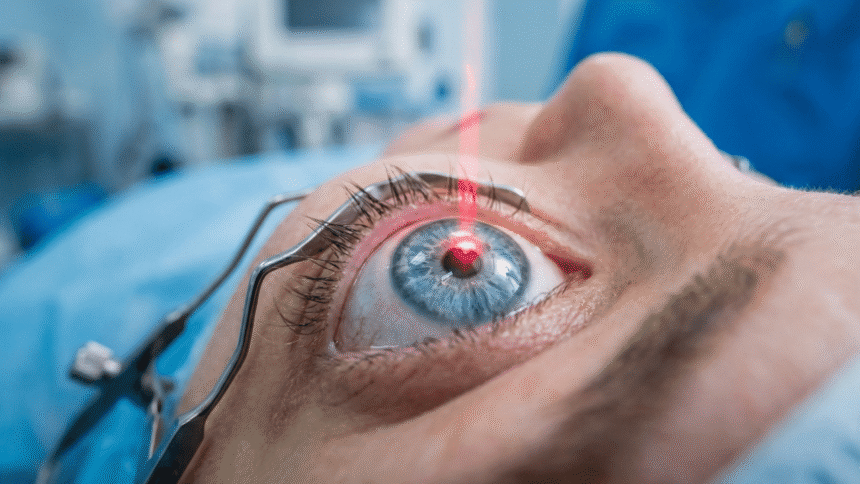
During the LASIK procedure, an eye surgeon creates a thin corneal flap and lifts it to access the underlying cornea. The surgeon then uses a specialized laser to reshape the cornea. The cornea is the clear front surface of the eye, and it allows light to enter and focus on the retina. By carefully reshaping this tissue, the surgeon changes how the eye bends light as it enters, enabling it to focus more precisely on the retina. The corneal flap is repositioned afterward for healing. This process improves visual clarity, and it can reduce or eliminate the need for glasses and contact lenses.
To be a candidate for LASIK, you should be at least 18 years old and have a treatable refractive error. Thick, healthy corneas and generally good eye health are also requirements. Individuals with unstable refractive errors, severe dry eyes, and uncontrolled diabetes may not be suitable candidates for this procedure. Your eye surgeon will evaluate your eyes and medical history beforehand, but many people discover they are good candidates for LASIK.
PRK Surgery
Photorefractive keratectomy (PRK) is another type of laser eye surgery used to correct refractive errors. During the procedure, the surgeon gently removes a thin layer of the cornea. A specialized laser then reshapes the underlying corneal tissue to correct how light focuses on the retina. A few days after the surgery, the outer layer grows back and begins to heal. PRK provides similar long-term visual outcomes to LASIK, but it does not require the surgeon to create a corneal flap. This can make it a more suitable option for patients with thinner corneas or certain corneal irregularities.
Cataract Surgery
Cataracts refer to when the eye’s natural lens begins to cloud, and it can make your vision blurry, dim, or less colorful. This condition develops when proteins in the lens clump together. It is commonly due to aging but may also be accelerated by other conditions, such as diabetes and excessive UV sun exposure.
Surgery is the only way to remove a cataract. During this procedure, the surgeon extracts the clouded lens and replaces it with a clear artificial one known as an intraocular lens (IOL). Removing the cataract helps restore clear vision, allowing light to focus properly on the retina. When discussing this laser eye surgery with your eye doctor, share whether the cataracts are interfering with your daily life. If they are, surgery may be recommended. Possible candidates include those who experience:
- Difficulty reading or driving at night
- Blurry or hazy vision
- Increased sensitivity to glare or bright lights
- Fading or yellowing of colors
- Frequent changes in eyeglass or contact lens prescriptions
Learn More About Laser Eye Surgery
These procedures are effective for many people, allowing them to experience increased freedom in their daily activities. With laser eye surgery, you can improve your vision and reduce your reliance on glasses or contact lenses. Your choice will depend on your individual vision needs, eye health, and your surgeon’s recommendation. Contact an experienced ophthalmologist today to discuss your eye concerns and review your treatment options.