


Dental implants are an innovative solution in restorative dentistry, and they offer a durable option for individuals with missing teeth. This technology integrates with the jawbone to provide a stable foundation for artificial teeth. Patients evaluating this option benefit from learning more about the mechanisms and procedures involved, enabling them to make an informed decision about their oral health.
What Are Dental Implants?
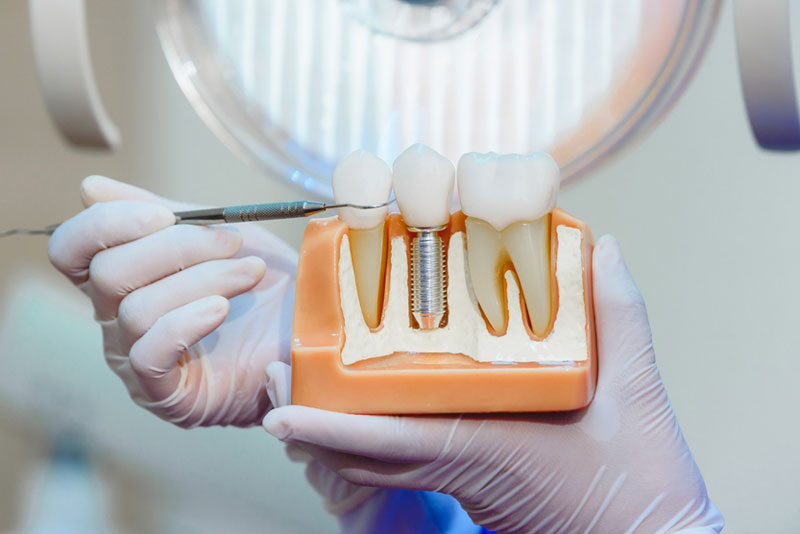
Dental implants are surgical components that interface with the bone of the jaw or skull to support a dental prosthesis. The primary structure consists of a titanium post that resembles a screw, and this post acts as an artificial root for the replacement tooth. Titanium is the material of choice because the body accepts it without generating an immune response. This compatibility allows the implant to function safely within the body for extended periods.
Attached to this post is an abutment, which serves as a connector between the implant screw and the visible crown. The crown is custom-made to match the color and shape of the patient’s natural teeth, resulting in a potentially seamless appearance. This three-part design provides structural integrity comparable to that of a natural tooth, and this allows for normal oral function.
What Are They Used For?
Dental implants replace a single missing tooth or multiple teeth without affecting adjacent healthy teeth. They serve as anchors for dental bridges or as stabilizers for removable dentures. This application improves the patient’s ability to chew and speak properly, as these functions are often compromised by tooth loss. In scenarios where a patient has lost all teeth in an arch, implants support a full fixed bridge or denture.
How Do They Work?
The fundamental principle behind dental implants is a biological process known as osseointegration. In this process, the titanium implant fuses directly with the jawbone over several months, and this creates a rigid, durable bond. This fusion allows the implant to withstand the forces generated during chewing, just as a natural tooth root does. Once osseointegration is complete, the implant stimulates the jawbone during chewing actions.
What Does the Process Involve?
The procedure begins with a comprehensive evaluation, including 3D imaging, to assess bone density and determine the most suitable placement site. The surgeon places the titanium post into the jawbone, and the site is closed to allow healing to occur. A recovery period spanning several months follows the initial surgery, allowing osseointegration to take place. The final step involves placing the custom-fabricated crown or prosthesis onto the abutment, completing the restoration process.
What Are the Benefits?
One advantage of dental implants is the preservation of the jawbone, preventing the bone resorption that may occur after tooth loss. Traditional bridges often require reducing adjacent teeth, but implants preserve the integrity of surrounding natural teeth. These devices offer high stability, enhancing patient comfort and function.
Patients may report improved speech and comfort, as implants function like natural teeth and do not slip within the mouth. The aesthetic result effectively restores the patient’s smile and facial structure. With proper maintenance and oral hygiene, dental implants can last a lifetime, making them a long-term solution.
Learn More About Implants Today
Understanding the technology and procedures behind dental implants clarifies their role in modern restorative dentistry. This solution offers functional and aesthetic advantages for those seeking to replace missing teeth, and it relies on proven biological principles. Consult with a qualified dental professional to determine if you are a suitable candidate for this procedure.